At the bus gathering point on Yutuo Road at 7 am, the sky was still dark, but neon lights were shining, and the drivers were calling out one by one, “Sang Ye Sang Ye…” The slumbering memories were being awakened… However, this time I went to the Gandan Monastery – the ancestral temple of Gelug School.
The trip departs at 7:30 and arrives at the temple by 9:30. After leisurely enjoying a bowl of beef noodle soup and a cup of sweet tea in the dining hall, I began to explore the temple.
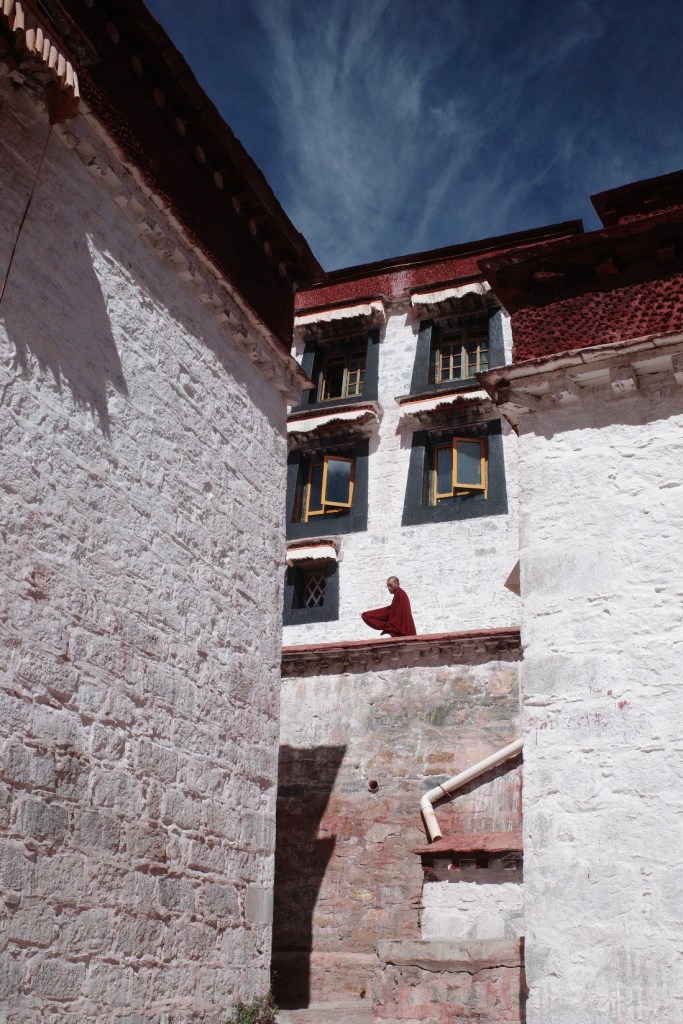
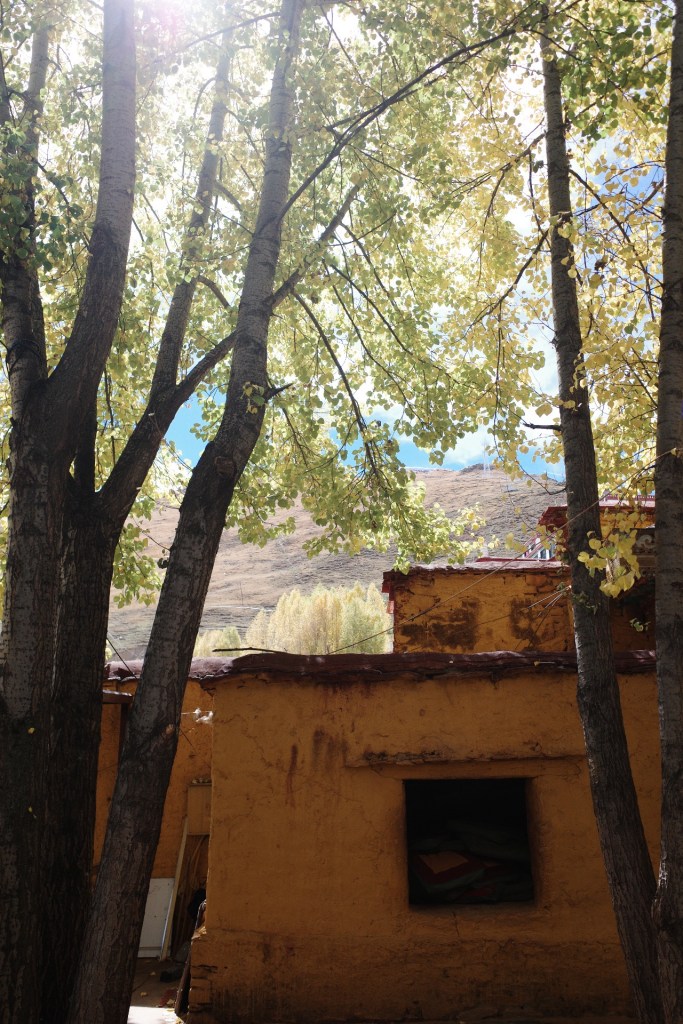
The temple is built along the slope of a mountain, but the main structure feels quite dense and even somewhat cramped, giving it a somewhat chaotic appearance. The layout on the exterior is unremarkable, unlike the Luo Zhuo wo long Monastery, which is also situated on a mountain peak and has a grand and opulent interior, or the Sang Ye Monastery, which is filled with artistic elements.
After going up and down and paying homage to the main halls, including the Cuo Qing Great Hall, the Ling-ta Hall, and the Debate Grounds, it was almost time for the bus pickup. There was no time to visit the retreat site of Guru Tsongkhapa or other significant religious sites in the back mountains. This would have to wait for another visit.
On the return bus ride, basking in the sunlight, and listening to the faint chanting coming from the Tibetan woman seated in the back, I felt relaxed and dozed off…
Day 2 in Lhasa, my friends asked where we were going today, I said to Jebum- Gang Art center, in fact, I was a little vague, I thought it was probably a private art exhibition hall. After almost three hours of visiting, I found that this was still a difficult space to define.
Jebum- Gang sits in the heart of the old city, between Dazhao Temple and Xiaozhao Temple. I asked two people to find its hidden entrance, which is so hidden in the city that even during the visit I could hear the shouts of street vendors outside the curtain and the dance music played by small shops.
This is a building with a magical fate.
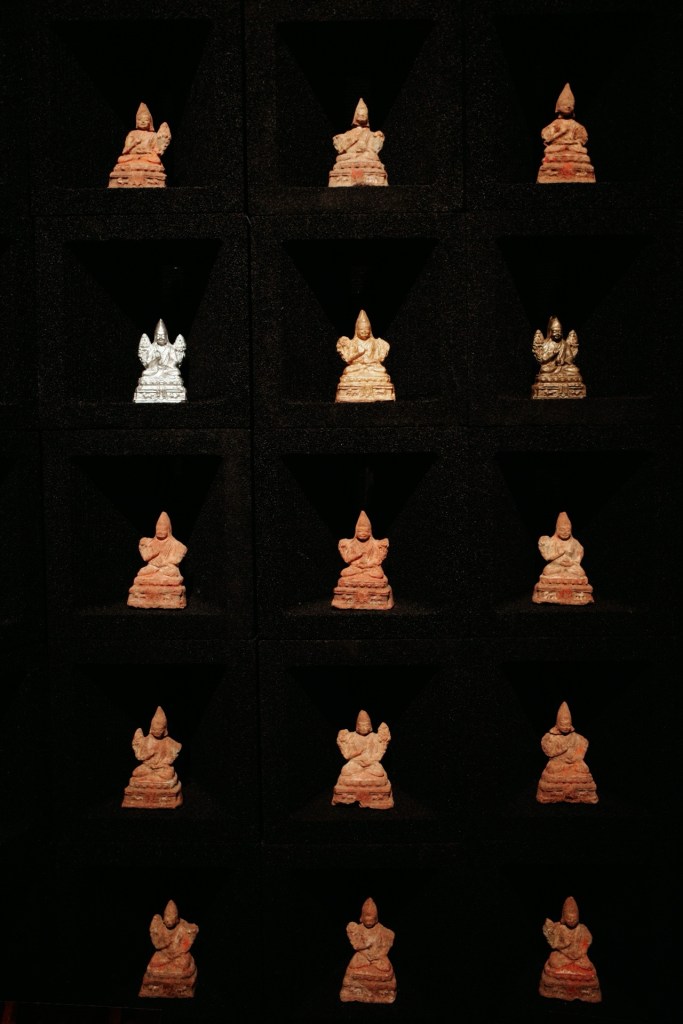
In the 18th century, literature records here is the Gelugpa monastery, stands a hidden 100 thousand Tsongkhapa statue of the five-storey white pagoda. This is also the origin of the name Ji Ben Gang: Ji is the honorary name of Master Tsongkhapa, and Ben means 100,000 in Tibetan. In later years, the White Tower collapsed.
The story of the 19th century is a shame. During the turbulent years, when British troops were looking out for Tibet, the local government built this three-dimensional Mandala building to try to fend off artillery fire through spiritual power, and the end was, of course, sad.
In the 20th century, the mission of the building changed from religious to secular, and hydropower stations were built around it; Later, it was turned into a grain warehouse for the storage of highland barley.
Today, under the renovation and reconstruction of a team of experts, it has become a bridge between the ancient and the modern. Along the corridor of Mandala building, visitors can see the murals on the walls while learning about the building’s past and present through an introduction.
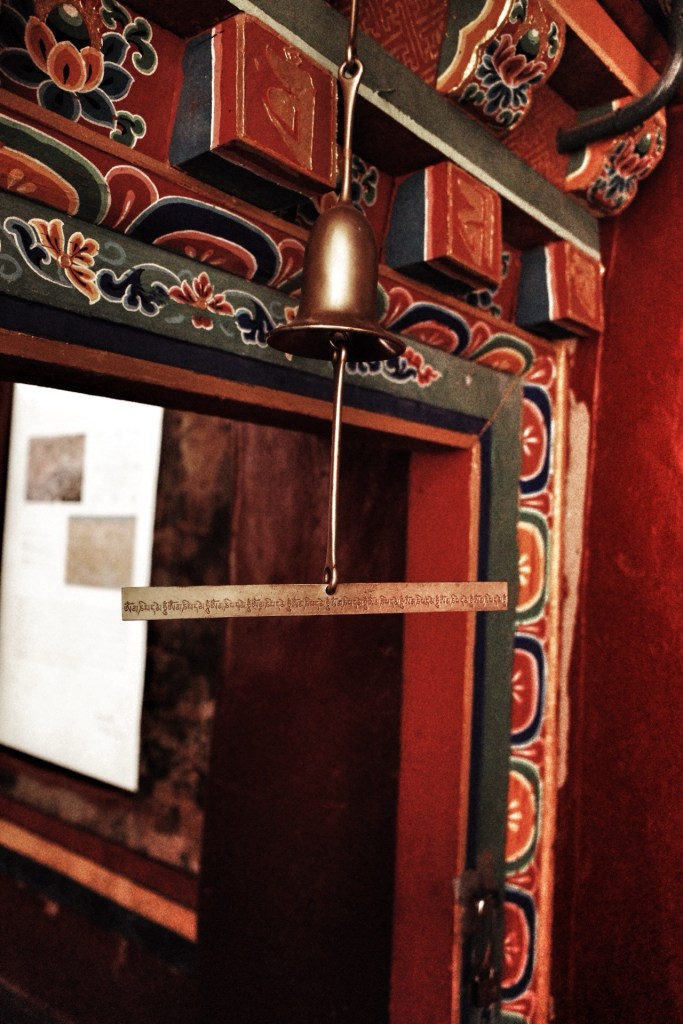
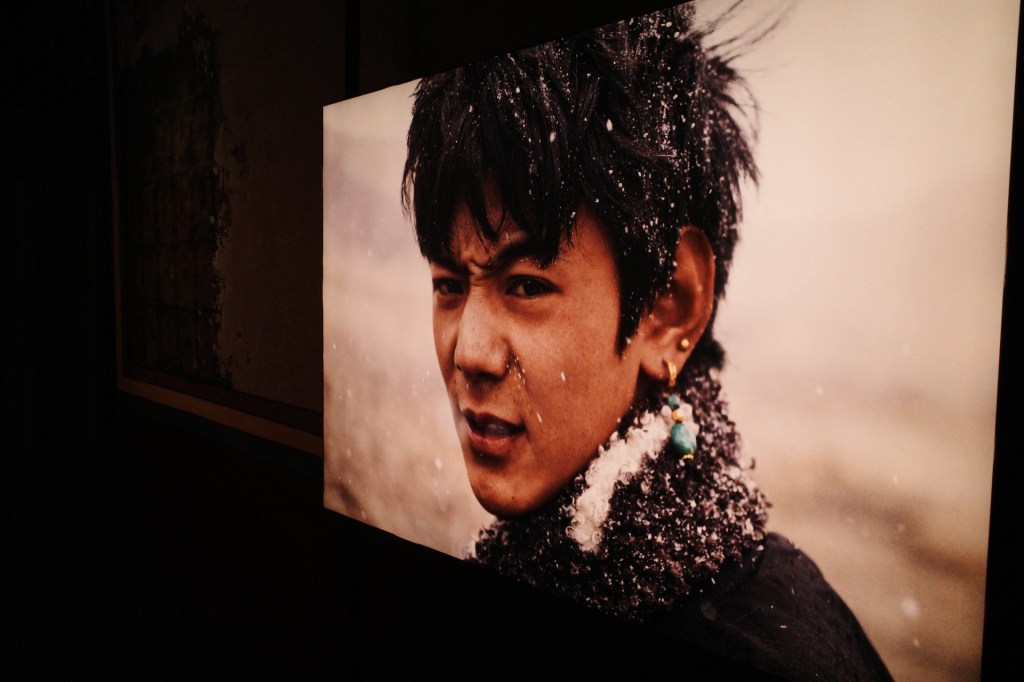
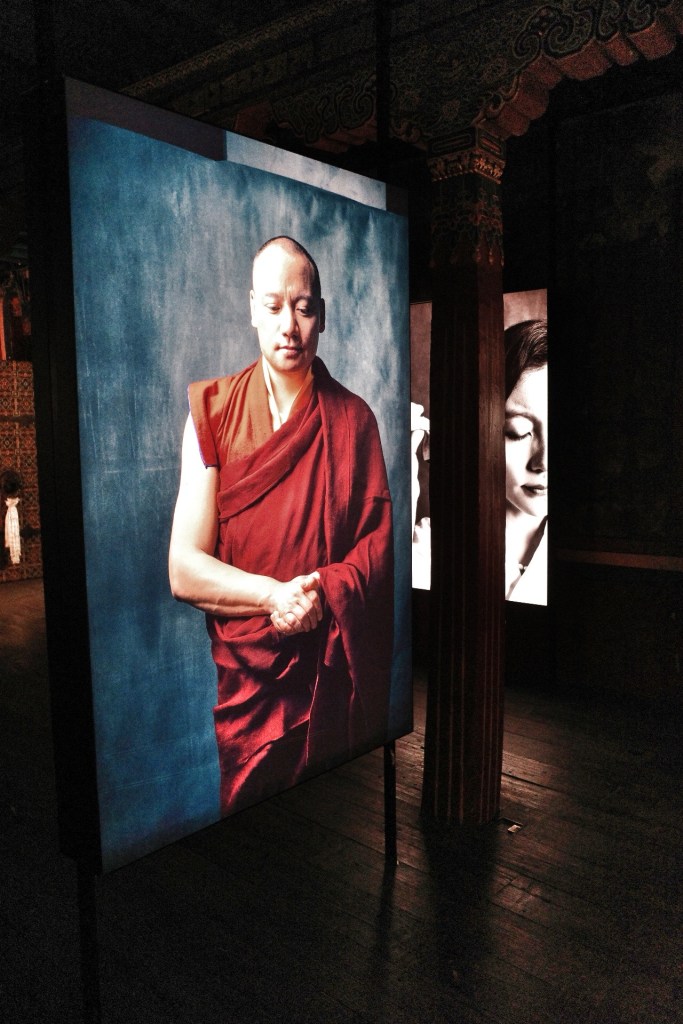
Start by the southern door and follow the clock back to your starting point. The four southeast and northwestern doors are painted with the four great Heavenly Kings of Buddhism, the goddess of the four seasons, and the master of lotus root. Entering the central area, which regularly hosts exhibitions of contemporary art, there is currently a photography exhibition dedicated to contemporary Tibetans.
The entire experience was very immersive. There were very few visitors, the interior of the Temple was deep and silent, and the rays at the top were just as bright. The standard of written introduction is high, concise, and it is both philosophical and poetic. In addition to the content related to the Art Center, there were a few presentations on Tibetan culture. One of the things that struck me most was the part of Tibetan traditional music. When I put on my headphones and heard the Milarepa‘s song, my eyes went wet.
The revitalization of such a forgotten and dilapidated space has involved a great deal of hard work by the cultural and tourism team responsible for the renovation. This includes hardware work such as firefighting, electricity, and ground waterproofing, as well as software content such as data curation, exhibition content positioning, and design.
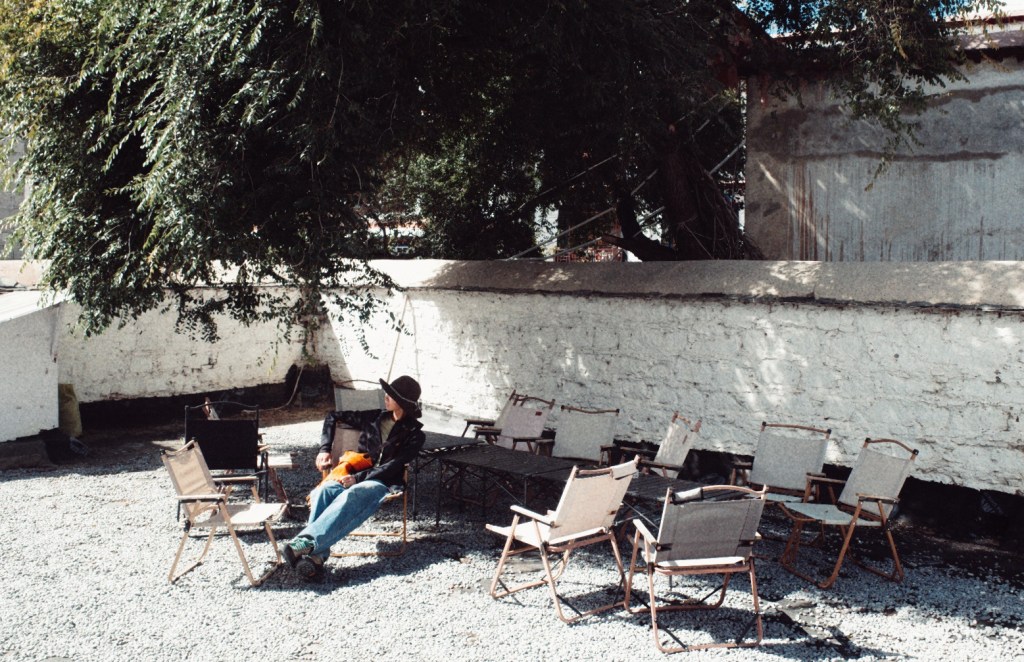
Since only one floor of the original three-story building remains, the roof area has been turned into a relaxing terrace for people to enjoy in the sun and drink coffee.
The only thing that affects the experience is that the detailed introduction has to be sent through the Official Account message template to listen to the voice, which is a bit troublesome. It would be better if we could make brochures.









 每天都是一种练习